Top L-Mount lenses: my Sigma 28–105mm F2.8 pick
 By Ryan Rice ·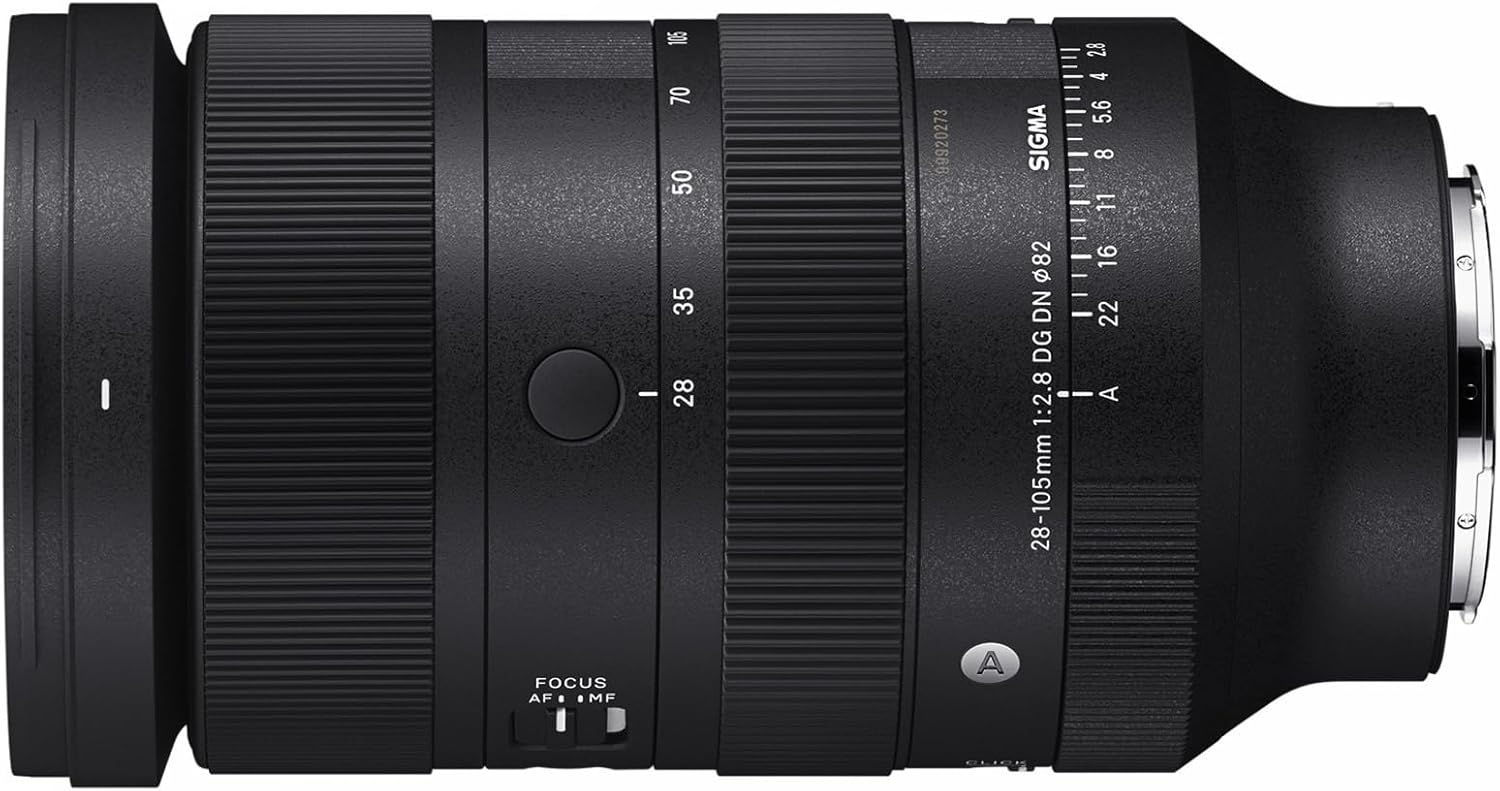
My first pick for this L-Mount lens guide is the Sigma 28–105mm F2.8 DG DN Art. Its appeal is the range: one zoom covers wider scenes, everyday compositions and tighter portraits while keeping a constant F2.8 maximum aperture.
Below are five Sigma lenses available in L-Mount, organized around different shooting needs. This is a focused shortlist, not an exhaustive ranking of every Panasonic, Leica and Sigma lens or a claim that I have personally tested them all.
Affiliate disclosure: As an Amazon Associate I earn from qualifying purchases. Buying through the Amazon links may earn me a commission at no extra cost to you.
Full-frame lenses for cameras like the Panasonic LUMIX S1II
All five picks here are full-frame lenses in their L-Mount versions, suitable for compatible full-frame L-Mount cameras such as the Panasonic LUMIX S1II (S1 Mark II) covered in my camera article. Full-frame describes the sensor coverage; L-Mount identifies the lens mount. You need both the right lens coverage and the correct mount.
Panasonic also makes Micro Four Thirds cameras, so the brand name alone does not establish compatibility. Select L-Mount at checkout and check support for your exact body and firmware.
Five L-Mount lenses to consider
| Lens | Where it fits | Main trade-off |
|---|---|---|
| 1. Sigma 28–105mm F2.8 Art | My first pick for a versatile zoom | Nearly 1kg; starts at 28mm |
| 2. Sigma 70–200mm F2.8 OS Sports | Events, distant details and telephoto portraits | More weight and bag space |
| 3. Sigma 50mm F1.4 Art | Everyday scenes and portraits | Fixed focal length |
| 4. Sigma 14–24mm F2.8 Art | Ultra-wide landscapes, interiors and night skies | Specialized wide-angle range |
| 5. Sigma 35mm F1.2 DG II Art | Environmental portraits and low light | Fixed focal length; careful focus at F1.2 |
1. Sigma 28–105mm F2.8 DG DN Art — my pick
The 28–105mm is my starting point for this list. The range offers flexibility when you want to change framing without changing lenses, and the constant F2.8 aperture remains available throughout the zoom range.
Sigma specifies a 995g weight for the L-Mount version and an 82mm filter thread. Those are important practical considerations for a long day of shooting or a video setup. The 28mm wide end is also a reason to think about what you shoot most: very tight interiors or expansive foreground-heavy landscapes may call for something wider.
If the range fits your work, this is the lens to explore first. Sigma’s official specifications.
2. Sigma 70–200mm F2.8 DG DN OS Sports — when you need more reach
For tighter framing from farther away, the 70–200mm F2.8 adds reach beyond the first pick. Sigma includes optical stabilization and lists the L-Mount version at 1,345g. It is a different commitment in weight and space from a compact everyday zoom.
This range is useful to consider for event coverage, distant details and portraits where you have room to work. It complements a standard zoom rather than replacing its wider views.
See the 70–200mm specifications.
3. Sigma 50mm F1.4 DG DN Art — a versatile prime
My third pick is the Sigma 50mm F1.4 DG DN Art in L-Mount. This full-frame prime offers a standard focal length and an F1.4 maximum aperture, making it a useful option to consider for portraits, everyday scenes and available-light photography.
Compared with a zoom, the fixed focal length encourages you to choose your camera position deliberately. At F1.4, focus placement becomes especially important when working close to a subject. Stop down when the composition needs more depth of field.
See Sigma’s 50mm F1.4 specifications.
4. Sigma 14–24mm F2.8 DG DN Art — for ultra-wide landscapes and night skies
The Sigma 14–24mm F2.8 Art is my fourth pick. Its 14mm wide end makes it worth considering for expansive landscapes, tight interiors and night-sky compositions.
Sigma offers this full-frame lens in L-Mount and specifies a 795g weight. It has a constant F2.8 maximum aperture and a rear filter holder. Allow room for its size and weight in your camera bag.
Choose the L-Mount version for your compatible Panasonic, Sigma or Leica body. The Sony E-mount version is a different product and will not mount directly on an L-Mount camera.
See Sigma’s 14–24mm L-Mount specifications.
5. Sigma 35mm F1.2 DG II Art — for environmental portraits and low light
My fifth pick is the Sigma 35mm F1.2 DG II Art for L-Mount. This is the second-generation DG II model. Its 35mm focal length offers a wider view than the 50mm, giving you more room to show the setting around a person or tell a story through the surroundings.
The F1.2 maximum aperture provides another creative option for available-light shooting and shallow depth of field. It does not mean every scene should be photographed wide open: choose the aperture that keeps the important parts of your image in focus.
Consider this lens for environmental portraits, street scenes and video compositions where the background matters. It pairs a fixed viewpoint with a very wide maximum aperture, rather than offering the framing flexibility of a zoom.
See Sigma’s 35mm F1.2 DG II specifications.
Choose the lens that fills a real gap
Start with the photographs or video shots you cannot easily make with your current kit. Need a wider view? Look at the 14–24mm. Want a prime for people and everyday scenes? Compare the 50mm and 35mm. Need reach? Explore the 70–200mm. For a versatile starting point, my pick remains the 28–105mm.
Before ordering, confirm that the selected product is the L-Mount version. These lenses may also be sold in other mounts. Check compatibility with your exact body, including autofocus and video features, and account for filters, support equipment and carrying weight.
Explore the Panasonic LUMIX S1II guide, compare SD cards, or view my photography.