Tamron 16–50mm f/2.8 A: a compact everyday zoom for APS-C
 By Ryan Robert Rice ·
The Tamron 16–50mm f/2.8 A (B091) deserves its own look as an everyday APS-C lens. I would consider it for a small camera kit that needs to cover people, places and behind-the-scenes video without constant lens changes. This is a specification-based buying guide, not a hands-on review.
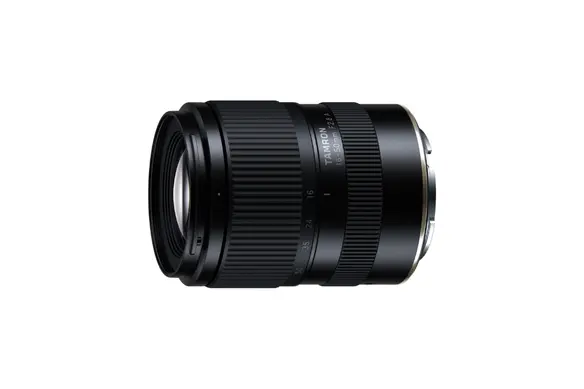
What the 16–50mm range gives you
On Canon APS-C, the view is equivalent to 25.6–80mm on full frame. Sony, Nikon and Fujifilm APS-C versions give a 24–75mm equivalent view. These numbers describe framing; the lens’s actual focal length remains 16–50mm. Tamron product overview
That is a useful spread for an establishing shot, a conversation and a closer detail. For a tight interior or an arm’s-length talking shot, I would check the widest view before buying. A standard zoom can be convenient without being wide enough for every room. I would bring a wider lens when the location demands it.
Why a constant f/2.8 aperture helps
The maximum aperture stays at f/2.8 throughout the zoom range. That lets you zoom without the maximum available aperture becoming smaller at the long end. It is useful when planning exposure in changing locations, though f/2.8 is not always the best creative choice.
For a single person with some distance behind them, a wider aperture can help separate the subject from the background. For a group standing at different distances, I would stop down to keep more faces in focus. A fast lens gives you another option; it does not remove the need to choose a depth of field.
Size, autofocus and close detail
The Canon RF version weighs 305g and measures 77.6mm long. It takes 55mm filters. Minimum focus distance is 0.15m at the wide end and 0.29m at the long end, with maximum magnification of 1:4.5 and 1:4.8 respectively. Official dimensions and close-focus specifications
Those close-focus figures make small details worth exploring, but this is not a 1:1 macro lens. Focus distance is measured from the sensor plane, not the front of the lens. Leave space for light to reach the subject instead of assuming the quoted distance is your working clearance.
Tamron specifies a VXD linear autofocus motor, moisture-resistant construction and a fluorine coating. Manufacturer feature overview. I would still test focus transitions with my own body and microphone. For video, I would also check framing changes while focusing, handheld stability and how the combination balances on a gimbal. None of those can be settled by the aperture number alone.
Choose the correct mount
This is an APS-C lens offered in Canon RF, Sony E, Nikon Z and Fujifilm X versions. There is no L-Mount version in the announced lineup, so it is not a lens recommendation for the LUMIX SHX1.
| Mount | Launch price | Announced release |
|---|---|---|
| Canon RF | $549 | October 29, 2026 |
| Sony E | $529 | October 29, 2026 |
| Nikon Z | $549 | November 19, 2026 |
| Fujifilm X | $529 | December 17, 2026 |
Source: Tamron Americas launch announcement. Checked November 18, 2026. Launch dates do not guarantee retailer inventory. Check the Canon RF version at B&H for current price and stock.
Who I would put it on the shortlist for
I would shortlist it for someone building a light APS-C kit for travel, family photos, portraits and everyday video. Before ordering, compare it with the lens you already own: are you missing a wider aperture, a wider view or more reach? This lens addresses those needs differently. If your current zoom already covers the shots and light you work in, keeping it may be the better choice.
For me, the appeal is fewer lens changes in a small bag. I would judge it by whether it makes the day easier and delivers the shots, not by expecting a compact standard zoom to do every job.